












WASHINGTON D.C.
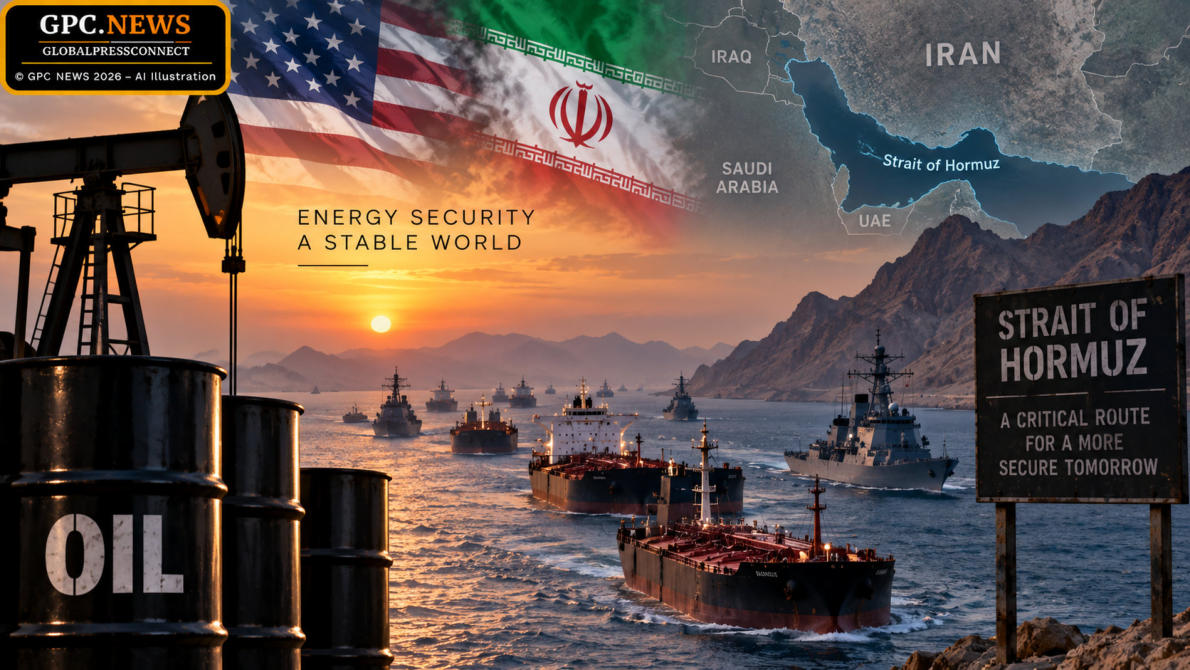
Global Press Connect provides independent news and analysis on international  politics, the economy, and humanitarian developments. © 2026 GlobalPressConnect | GPC.NEWS Founded and operated by Simone Mayer & Helping Hands for Children Foundation Inc. | Los Angeles, California, USA GlobalPressConnect (GPC.NEWS) is an independent international news organization dedicated to delivering accurate, impartial, and timely journalism. Our mission is to provide verified reporting, editorial integrity, and in-depth coverage of global affairs, politics, business, financial markets, technology & AI, entertainment, humanitarian issues, weather, and breaking news. All Rights Reserved. OIL PRICES HOLD NEAR SIX-WEEK HIGHS AS U.S.-IRAN CONFLICT THREATENS GLOBAL SUPPLY    LONDON, September 7, 2026 — GPC.NEWS — Global oil prices remain near six-week highs as escalating confrontation between the United States and Iran disrupts shipping around the Strait of Hormuz and raises fears over supplies from one of the world's most important energy-producing regions.  Brent crude has been trading around $96 per barrel, after recently approaching $98, while U.S. West Texas Intermediate has remained above $90 per barrel. The sharp rise reflects mounting concern that military confrontation in and around the Persian Gulf could interfere with the movement of crude oil and petroleum products from major Middle Eastern producers. The Strait of Hormuz is at the center of those fears. The narrow waterway connects the Persian Gulf with the Gulf of Oman and the Arabian Sea and serves as a critical export route for oil and liquefied natural gas.  Shipping traffic through the Strait has already fallen dramatically as vessel operators reassess security risks following attacks involving U.S. and Iranian forces. Iran's announcement that it intends to establish a new restricted maritime zone near Hormuz has added another layer of uncertainty for tanker operators, insurers and commodity traders. Energy markets are particularly sensitive to any threat involving Hormuz because a substantial share of internationally traded petroleum passes through the waterway. Even without a complete closure, prolonged delays, higher insurance costs and rerouting risks could increase transportation expenses and eventually feed through to consumers.  A sustained surge in crude prices could also complicate the global inflation outlook just as central banks and governments attempt to manage borrowing costs and consumer-price pressures. For now, traders are closely watching military developments, tanker movements and statements from Washington and Tehran for indications of whether the confrontation will escalate further or begin to ease. With one of the world's most important energy arteries under growing pressure, the Strait of Hormuz has once again become a central risk for global markets.  © GPC NEWS 2026 MARKETS & ECONOMY